Sleep Medicine in Idaho Falls: Evaluation and Treatment

Idaho Falls residents experiencing loud snoring, persistent fatigue, or poor sleep quality find expert evaluation through Christina Finnerty, FNP-C, at Ridgeline Medical. With over 27 years of healthcare experience, Finnerty assesses symptoms, identifies underlying causes of sleep apnea, and builds personalized treatment plans focused on long-term health rather than quick fixes.
Key Takeaways
Christina Finnerty, FNP-C, specializes in sleep apnea evaluation and treatment at Ridgeline Medical in Idaho Falls.
She brings over 20 years of healthcare experience, beginning her career in 1999 in pediatric intensive care.
Schedule your sleep apnea consultation by calling Ridgeline Medical at 208-715-9990 for personalized evaluation and care.
Her expertise spans insomnia, sleep disorders, diabetes management, and comprehensive primary care services for patients.
What Will a Sleep Apnea Evaluation Accomplish?
A sleep apnea evaluation identifies the root cause behind loud snoring, fatigue, and restless nights, rather than masking symptoms with a quick fix. Idaho Falls residents gain a clear picture of how their breathing patterns affect overall health. Ridgeline Medical, located in Idaho Falls, Idaho, offers this evaluation close to home, making expert review of persistent sleep complaints easy to reach without a long drive.
Providers at Ridgeline Medical build personalized, long-term treatment plans instead of handing out a quick prescription and moving on. That distinction matters because sleep issues rarely exist in isolation. Left unaddressed, they connect to a wider set of health concerns.
Why does untreated sleep apnea affect more than just sleep?
Poor sleep quality links to elevated blood pressure, depression, anxiety, weight gain, diabetes, hormone imbalances, and chronic pain. These conditions often feed into one another, creating a cycle that grows harder to break the longer it continues. An evaluation interrupts that cycle early, before secondary health problems take hold.
A thorough evaluation typically accomplishes the following:
Reviews sleep history, snoring patterns, and daytime fatigue levels
Screens for related conditions, including blood pressure changes and weight fluctuations
Builds a personalized plan focused on long-term health, not temporary relief
Establishes a baseline for tracking improvement over time
Idaho Falls patients leave the visit with answers, not guesswork. That clarity sets the stage for meaningful, lasting change.

What Are Idaho Falls Sleep Apnea Warning Signs?
Loud, persistent snoring and daytime exhaustion rank among the clearest warning signs that an Idaho Falls resident may be dealing with sleep apnea in Idaho Falls. Left unaddressed, these symptoms quietly erode energy, focus, and long-term health. Ignoring them does not make them disappear; it only delays an accurate diagnosis.
Christina Finnerty, FNP-C, brings documented expertise in treating insomnia and sleep apnea, along with related conditions such as bronchitis and diabetes. That breadth of experience matters because sleep disturbances rarely show up in isolation. They often overlap with other physical symptoms that deserve attention together.
How does snoring differ from sleep apnea?
Snoring alone does not confirm sleep apnea. Frequent, loud snoring paired with gasping or choking sounds during sleep raises concern. Patients who notice a bed partner reporting pauses in breathing should treat this as a signal worth discussing with a provider.
Why does fatigue matter as a warning sign?
Fatigue that persists despite a full night's sleep often points to disrupted breathing patterns rather than simple tiredness. Idaho Falls patients describing this kind of exhaustion are heard carefully at Ridgeline Medical, where providers take time to truly listen rather than rush to a quick explanation.
Common warning signs include:
Loud, habitual snoring
Gasping or choking during sleep
Morning headaches
Persistent daytime fatigue despite adequate hours in bed
Difficulty concentrating
Every patient describing these symptoms is treated as a valued partner in their own care, not simply a list of complaints to address.
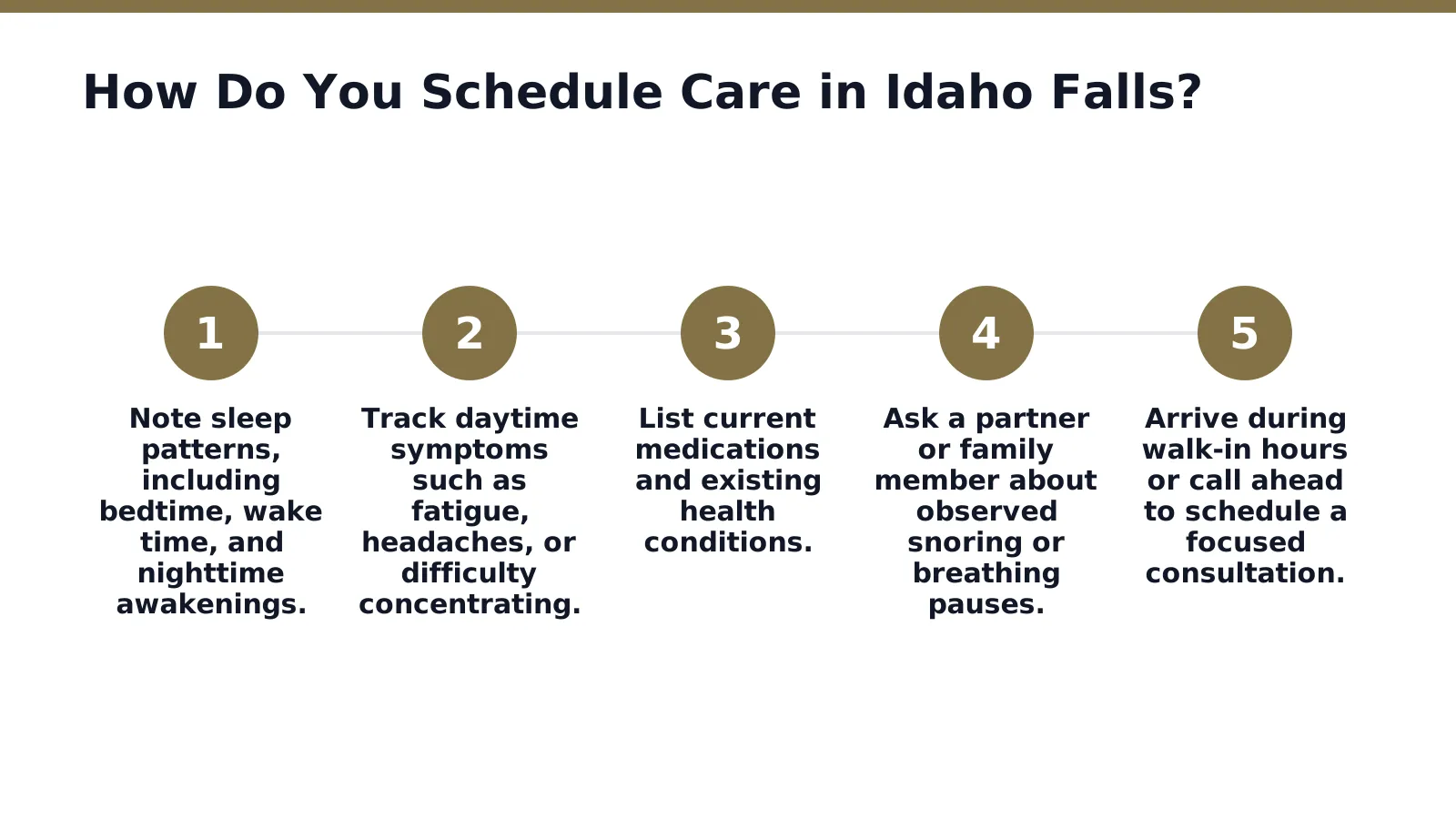
How Do You Schedule Care in Idaho Falls?
Idaho Falls residents reach Ridgeline Medical through two paths: a walk-in visit for urgent concerns or a scheduled consultation for ongoing issues like fatigue and disrupted breathing during sleep. No appointment stands between a patient and same-day care for non-emergency illnesses or injuries. That access matters for residents juggling work, family, and nights of poor rest who need answers without a long wait.
What Happens During a Sleep Evaluation?
Patients describing loud snoring, daytime exhaustion, or suspected sleep apnea in Idaho Falls meet with a provider who reviews symptoms and medical history in detail. Christina Finnerty, FNP-C, a board-certified Family Nurse Practitioner, brings expertise in sleep health alongside hormone balance, medical weight loss, and whole-body wellness. She treats patients as whole people, not isolated symptoms, drawing on more than 27 years of healthcare experience as co-owner of Ridgeline Medical in Idaho Falls.
How Should a Patient Prepare Before the Visit?
Preparation starts before walking through the door. Patients benefit from following these steps:
Note sleep patterns, including bedtime, wake time, and nighttime awakenings.
Track daytime symptoms such as fatigue, headaches, or difficulty concentrating.
List current medications and existing health conditions.
Ask a partner or family member about observed snoring or breathing pauses.
Arrive during walk-in hours or call ahead to schedule a focused consultation.
Bringing this information speeds diagnosis and helps the provider build a treatment plan suited to each patient's life and long-term health goals.
What Happens During Your Sleep Evaluation Visit?
A sleep evaluation visit follows a structured process designed to uncover why rest feels incomplete. Idaho Falls residents dealing with persistent fatigue, loud snoring, or restless nights meet with a provider trained to look past the obvious complaint. Sleep apnea Idaho Falls patients bring often starts with a snoring partner's observation or weeks of unexplained exhaustion, and the visit builds from there.
Patients can expect the evaluation to move through four clear stages:
Discuss symptom history. The provider asks about snoring patterns, daytime tiredness, and any witnessed breathing pauses during sleep.
Review overall health background. Sleep concerns often connect to blood pressure, mood, weight, or chronic pain, so the conversation covers the whole health picture.
Identify root causes. Rather than treating fatigue as a standalone symptom, the provider traces it back to underlying drivers using a root-cause approach.
Build a personalized plan. Findings translate into a long-term wellness strategy, not just a prescription pad.
Why does the provider ask about unrelated health issues?
Sleep rarely exists in isolation from the rest of the body's systems. Christina Finnerty, FNP-C's functional medicine training equips her to connect symptoms like poor sleep to deeper imbalances, rather than treating each complaint separately. That broader lens often reveals connections patients never considered.
What shapes this approach to patient care?
Finnerty's clinical foundation traces back to 1999, when she began her career in a Pediatric Intensive Care Unit. That early experience taught her to treat vigilance and compassion as inseparable from medicine. She carries that same whole-person mindset into every sleep evaluation today, prioritizing long-term wellness over quick fixes.
What Mistakes Should You Avoid After Diagnosis?
Skipping follow-up care ranks as the most common error after a sleep apnea diagnosis in Idaho Falls. Treatment does not end with a test result; it begins there. Patients who stop tracking symptoms or abandon a treatment plan early often see fatigue and snoring return within weeks.
Ridgeline Medical builds thoughtful, personalized treatment plans designed around each patient's long-term health and personal goals, rather than a one-size-fits-all approach. A diagnosis without a structured plan leaves patients guessing. That guesswork leads to inconsistent habits, missed check-ins, and slower progress toward restful sleep.
Is It Safe to Adjust Treatment Without Guidance?
No. Adjusting a sleep apnea treatment plan without provider input risks undoing progress already made. Experienced providers help patients achieve both the amount of sleep they want and the quality their bodies actually need, a balance that requires professional oversight, not guesswork.
Common post-diagnosis mistakes include:
Ignoring scheduled follow-up visits after initial treatment begins.
Making changes to a sleep plan without consulting a provider.
Assuming symptom improvement means treatment is complete.
Delaying care because ongoing help feels inconvenient.
Local access removes that last excuse. Ongoing care stays within reach since Ridgeline Medical is located in Idaho Falls, Idaho, allowing patients to maintain momentum instead of losing it to distance or delay.
FAQ
Who provides sleep apnea evaluations in Idaho Falls?
Christina Finnerty, FNP-C, provides sleep apnea evaluations and treatment at Ridgeline Medical in Idaho Falls. She brings over 27 years of healthcare experience, including expertise in insomnia, sleep disorders, and diabetes management.
What happens during a sleep apnea evaluation?
The evaluation reviews sleep history, snoring patterns, and daytime fatigue levels while screening for related conditions like blood pressure changes and weight fluctuations. Finnerty then builds a personalized plan focused on long-term health.
How does snoring signal a problem?
Frequent, loud snoring paired with gasping or choking sounds during sleep raises concern for sleep apnea. A bed partner reporting breathing pauses signals the need for a professional evaluation.
Conclusion
In closing, sleep apnea evaluation and treatment in Idaho Falls begins with a single decision: to prioritize the restorative sleep your body requires. Christina Finnerty, FNP-C, and the team at Ridgeline Medical approach each patient's sleep concerns through a lens of whole-person wellness, recognizing that quality rest forms the foundation for long-term health. By choosing a provider who listens, consolidates your medical history, and builds a personalized plan, you move beyond fatigue toward genuine restoration. Your path to better sleep starts with that first evaluation.